How to Promote Vehicle Wraps on Social Media for Maximum Brand Impact
Promoting vehicle wraps on social media means turning mobile advertising into shareable visual content that drives local awareness and customer leads. This article teaches wrap shops and marketers how to use platform-specific short-form video, photo galleries, and interactive offline-to-online tactics to amplify impressions and brand recall. Many businesses miss small production details and measurement strategies that convert views into booked installs; this guide shows how to craft content, choose platforms, and measure ROI so wraps become measurable marketing assets. You will learn why social media suits vehicle branding, which platforms perform best, concrete content ideas (before/after, time-lapse, testimonials), and how to track conversions and optimize campaigns. The guidance uses semantic content strategies, covering creative types, platform mechanics, and measurement, so readers can apply tactics immediately. Understanding these fundamentals prepares you to build repeatable, local campaigns that link physical fleet visibility to online lead funnels.
Why Use Social Media Marketing for Vehicle Wraps?
Social media marketing for vehicle wraps leverages the visual strength of vinyl vehicle branding and the mobile reach of wrapped vehicles to amplify impressions and local discovery. Platforms reward short-form, visually engaging posts that show transformation and motion, which increases shareability and organic reach for automotive customization content. Using social channels is cost-effective compared with some traditional media because a single wrap can generate continuous impressions while social posts scale those impressions through shares and paid amplification. These dynamics make social media an efficient channel to turn vehicle branding into measurable awareness and lead-generation outcomes, which leads into specific benefits and mechanics for wraps as mobile advertising.
Social Media Marketing for Automotive Branding Objectives
The paper illustrates how social media marketing and analytics can assist businesses in achieving branding objectives by increasing their social media impact through advertising, getting social, using appropriate keywords, and creating effective and interactive communication channels with their intended audience.
Social media for brand image manipulation: an automotive industry applied approach, D Vagianos, 2024
Vehicle wraps act as moving billboards that earn repeated local impressions and reinforce brand recall, so social promotion multiplies that exposure by turning static street views into viral-ready content.
What Are the Benefits of Vehicle Wraps as Mobile Advertising?
Vehicle wraps provide continuous, place-based advertising by converting each mile traveled into a brand impression, making them highly efficient for local campaigns. This mobile advertising delivers frequent visual exposure in targeted neighborhoods and often outperforms static ads on a cost-per-impression basis when combined with social amplification. Wraps also offer durable visibility: high-quality vinyl film materials like 3M, Avery Dennison, and ORAFOL maintain color and finish, increasing the longevity of both the physical ad and the associated social content. Because wraps are highly photographic, they produce assets (before/after photos, time-lapse installs) that social algorithms favor, creating a feedback loop between on-the-road impressions and online engagement.
These advertising benefits naturally lead into how social channels specifically boost brand awareness for wrap shops and fleet operators.
How Does Social Media Boost Brand Awareness for Wrap Shops?
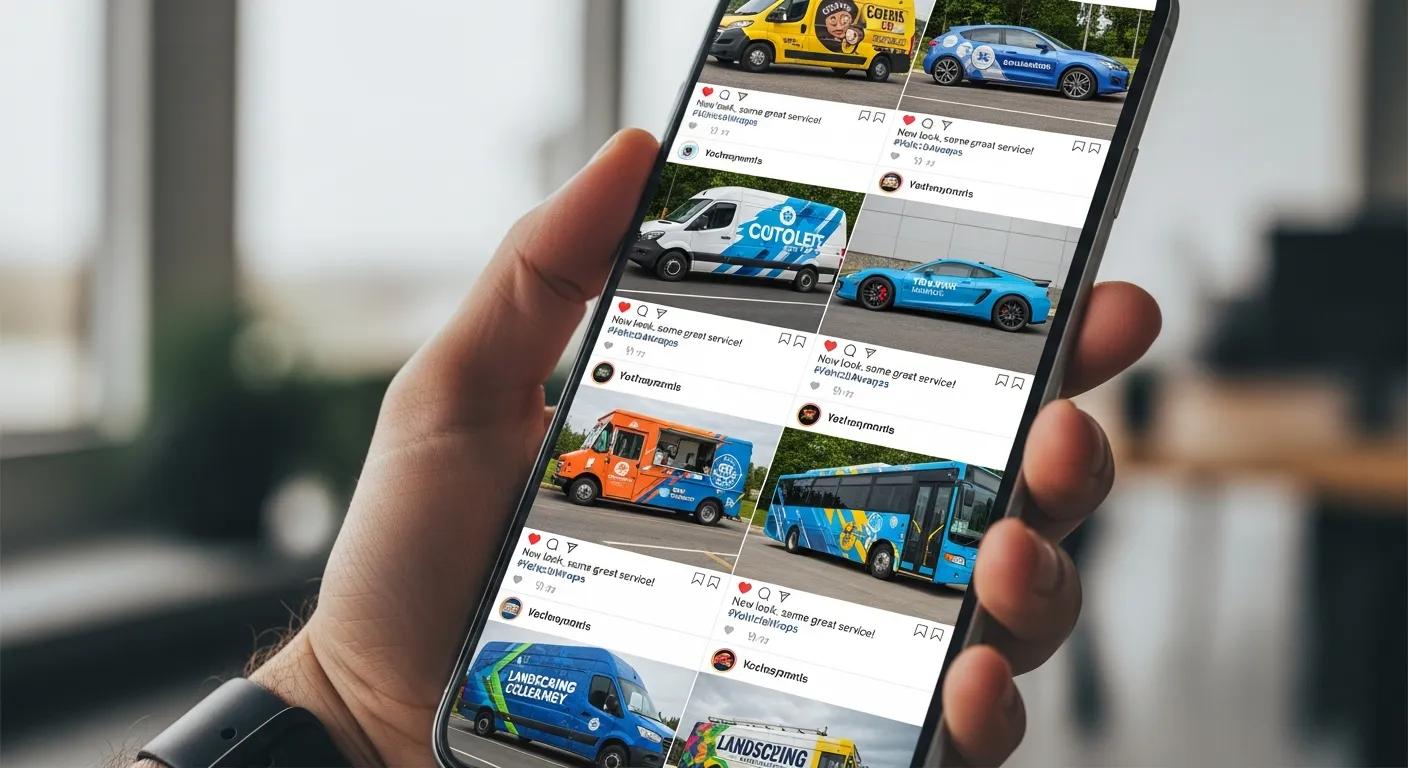
Social media boosts brand awareness for wrap shops by turning visual craftsmanship into discoverable content through platform features like Reels, Shorts, and Stories that prioritize engagement and local tags. Algorithms amplify concise videos and high-contrast images, while local SEO tactics (consistent location tags, geo-hashed hashtags, and optimized profiles) help nearby customers find wrap services. User-generated content and customer testimonials extend reach as satisfied clients share new wraps, creating authentic social proof that drives referrals. Combining these organic mechanics with targeted paid ads or boosted posts strengthens local reach and turns individual installs into scalable marketing outcomes.
A clear social strategy guides creative production, which then feeds into platform selection and the tactical formats described next.
Which Social Media Platforms Work Best for Promoting Vehicle Wraps?
Choosing platforms depends on goals: visual showcase, viral reach, local lead generation, or B2B fleet outreach; each platform supports different content formats and targeting approaches. Instagram excels for curated photos and Reels that highlight design details and reveal moments, while TikTok favors fast transitions and trend-driven clips that can make a wrap go viral with the right audio. Facebook remains effective for local ads and community groups where leads and bookings can be driven through targeted campaigns, and LinkedIn is useful when marketing fleet vehicle wrap branding to B2B decision-makers. These platform choices guide the creative recipes and measurement tactics that follow.
Below is a compact comparison to help pick platforms quickly.
This comparison clarifies which platforms map to specific marketing goals and informs the tactical recipes in the Instagram and TikTok subsections.
How to Use Instagram Reels and Stories for Vehicle Wrap Promotion?
Instagram Reels work best with a tight creative recipe: a 1–3 second hook, a 5–20 second reveal or transformation, and a single-line CTA or location tag to drive local discovery. Use Stories for installation updates, polls about designs, and swipe-up links to quote forms (or link stickers) to capture interest quickly. Hashtag strategy should combine brand, local, and niche terms. Include city tags and wrap-related keywords to surface in local searches and explore pages. Posting cadence of 2–4 Reels per week with daily Stories keeps the account active and supplies material for paid boosts or ad creatives.
These Instagram tactics translate directly to short-form formats elsewhere, especially TikTok, which favors trend integration and transitions.
What TikTok Trends Help Vehicle Wraps Go Viral?
TikTok amplifies wrap content when creators use platform-native trends like transition reveals, time-lapse process clips, and sound-driven challenges that align with the wrap’s visual punch. A common formula is a quick before clip, a clever transition (wipe/flip), and a dramatic after reveal timed to a trending audio beat, with descriptive captions and branded hashtags that invite duet or stitch. Participating in or adapting viral challenges, while keeping the wrap’s visual identity central, encourages user engagement and organic shares beyond the local area. Testing different trend types and measuring which audios and transitions drive saves and shares helps iterate rapidly on creative that works.
These platform mechanics feed into concrete content ideas next, with practical formats and production tips.
What Are Effective Social Media Content Ideas for Car Wraps?
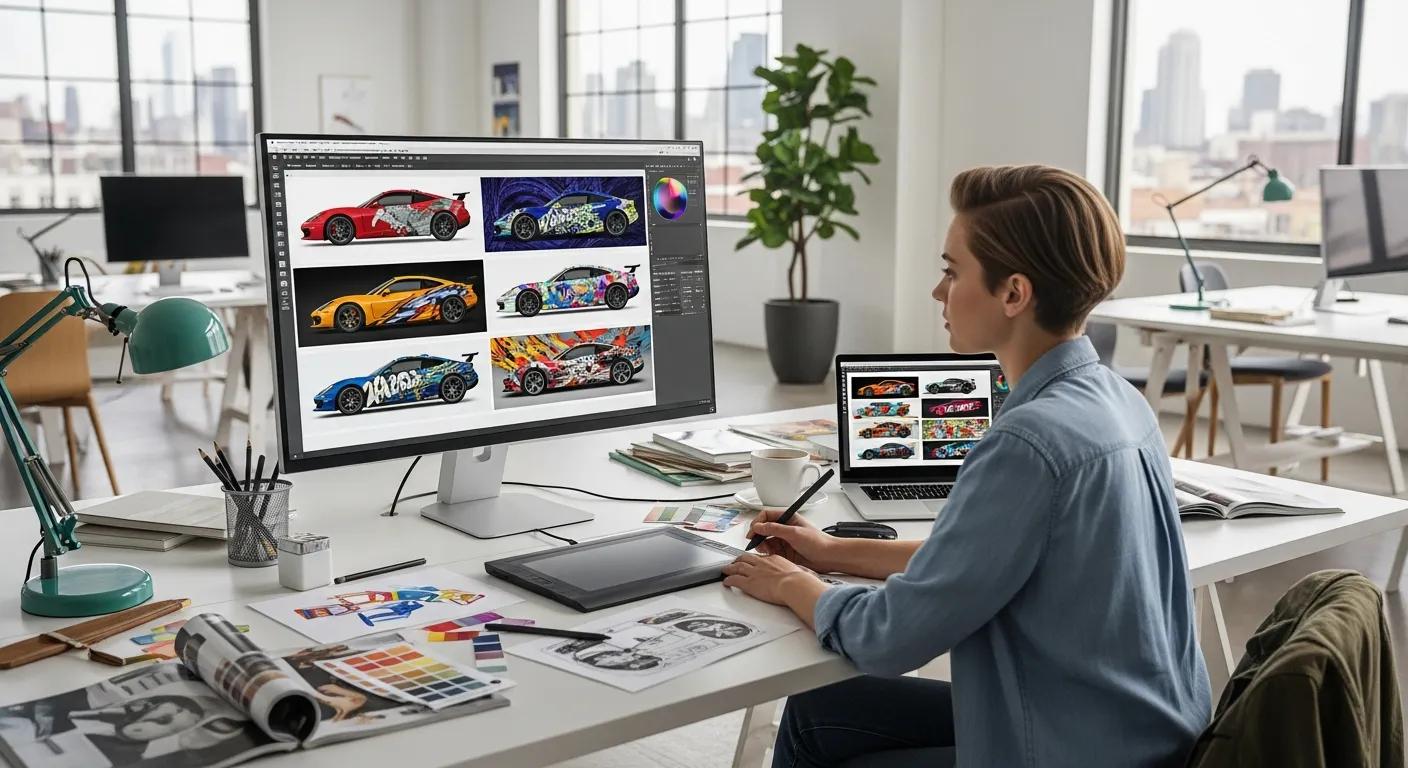
Effective content ideas center on transformation, process, and customer stories, formats that demonstrate value and authenticity while producing repurposable assets for ads and UGC campaigns. Before-and-after photos, time-lapse installation videos, client reaction clips, and behind-the-scenes design photos create a pipeline of short clips and stills suitable for Reels, TikTok, Stories, and Facebook posts. Interactive offline-to-online tactics (QR codes on the wrap linking to AR filters or portfolio galleries) turn parked vehicles into engagement hubs. Each content type supports different platform goals and can be mixed into an editorial calendar to sustain momentum and ad creative variety.
Below is a content comparison table that helps choose formats based on platform and intent.
Use this table to prioritize which assets to produce first and repurpose across channels for maximum efficiency.
Effective content ideas include the following actionable list of formats to produce regularly.
- Before-and-after posts that use consistent angles and a short client quote to highlight impact.
- Time-lapse installation videos edited with speed ramps and a clear reveal for Reels and Shorts.
- Short testimonial clips and owner reaction videos that humanize the installation and increase trust.
Producing these formats consistently creates a reliable stream of social-ready assets that can be repurposed into ads and boosted content.
For readers ready to move from ideas to action, free consultations and a portfolio review can help prioritize which asset types will perform best for your market; Central Ohio Wrap Services by Tridico Design Solutions offers portfolio access and consultation to evaluate local campaign fit.
How to Showcase Before-and-After Wrap Transformations?
Showcasing before-and-after transformations requires consistent framing, neutral lighting, and a clear storytelling caption that explains the client’s objective and the result. Use the same camera angle and distance for both shots to preserve credibility, and consider slider or carousel posts so viewers can interactively compare stages. Captions should include a concise value statement, local tags, and a call-to-action. Invite followers to comment on their favorite detail or request a quote. These posts also make strong paid ad creatives when combined with a local targeting strategy that reaches likely customers in relevant ZIP codes or city radii.
A reliable before/after workflow feeds the content calendar and provides strong social proof for both consumer and fleet audiences.
How Can Time-Lapse Videos and Client Testimonials Increase Engagement?
Time-lapse videos compress hours of installation into engaging 15–45 second clips that highlight skill, materials, and transformation while maintaining viewer attention. Edit with clear text overlays for steps, include captions for sound-off viewing, and add a quick CTA at the end to request a quote or view the portfolio. Testimonial clips should be concise, authentic, and shot with stable framing: 10–20 seconds is ideal for Reels and Shorts and can be repurposed into quote images or story highlights. Combined, these formats increase engagement by demonstrating craftsmanship and social proof, which improves both organic reach and ad performance when used in paid campaigns.
These production assets directly support measurement and paid strategies covered next.
How to Measure and Improve Social Media ROI for Vehicle Wrap Businesses?
Measuring ROI begins with selecting 3 primary metrics: impressions/reach for awareness, engagement rate for content resonance, and leads (form submits or call tracking) for conversion, then connecting social activity to real leads using UTMs and tracking systems. Set UTM parameters on links in bios and paid ads, track phone call conversions via call-tracking numbers, and log leads against campaigns in your CRM to calculate cost per lead and conversion rate. A/B test creative variations (thumbnail, hook, CTA) and measure which combinations produce the lowest cost per lead and highest conversion rate, then scale winners with modest budget increases while maintaining local targeting parameters.
The table below provides recommended benchmarks and tracking tips to evaluate performance.
These benchmarks help prioritize experiments and determine when to scale creative and ad spend.
What Key Metrics Track Social Media Success for Wrap Shops?
Track impressions and reach to measure awareness, engagement rate (likes, comments, saves) to assess content resonance, and click-through rate and leads to measure conversion effectiveness; each metric provides a different view of performance. Benchmark engagement for short-form video separately from static posts because formats perform differently; aim for higher saves and shares on transformation content. Use UTMs on all campaign links to attribute social traffic to specific posts or ads, and record lead sources in your CRM to connect installs to marketing activity. Regularly reviewing these metrics enables iterative improvements to creative and targeting, increasing the likelihood that content translates into booked jobs.
These measurement practices set the stage for combining organic UGC with paid amplification to scale results.
How to Use Paid Ads and User-Generated Content to Boost Results?
Combine authentic user-generated content with paid local targeting to lower creative costs and increase ad credibility. UGC performs well in feed placements because it signals real customer experiences. Use local radius targeting around service areas and create lookalike audiences from past customers for more efficient lead generation; for B2B fleet outreach, layer in industry and company-size targeting where available. Incentivize UGC with contests or discounts for customers who post their wrap and tag your account, then repurpose high-performing UGC into ad variations. Continuously A/B test headlines, CTAs, and thumbnails, and allocate budget to the best-performing combinations while monitoring CPL and lead quality.
Service-level attributes such as material choice, damage-free removal, and installation quality, plus on-site fleet options, improve campaign KPIs by producing cleaner, longer-lasting assets; for campaign-ready creative and portfolio access, contact Central Ohio Wrap Services by Tridico Design Solutions to discuss local fleet installation and material warranties, which can support measurable social campaigns.
Need this done?
Here's what I make for Columbus and Central Ohio businesses.